Each year, teachers write goals focused on their professional and student growth needs. Successful goal setting requires multiple check-ins throughout the year to reflect on practice, collect evidence of goal achievement, and work with instructional supports to guide goal success.
Start of School: Helping Teachers With Writing Good Goals
The purpose of goal setting is to authentically reflect on current professional practice, identify professional growth goals, establish and implement a professional learning plan to attain those goals, and track progress over time. Evaluators and staff members can set, submit, and edit professional goals in Strive. Secure messaging attached to each document allows documented communication between the evaluator and the staff member until the goal is marked complete.
.png)
Examples of SMART goals for professional learning:
By the end of the spring semester, I will participate in at least two professional development workshops on integrating inquiry-based labs and technology into science instruction, and to demonstrate my learning, I will implement at least three new strategies I learned, evidenced by updated lesson plans, lab activities, and student feedback surveys.
By the end of this school year, I will complete at least three professional development sessions focused on differentiated instruction in reading and math and implement at least two new strategies from these trainings in my classroom, as measured by lesson plans, student work samples, and reflections in my professional growth journal.
Examples of SMART goals for student growth:
By the end of the school year, 85% of my 2nd grade students will demonstrate growth in reading fluency by increasing their words read correctly per minute by at least 20%, as measured by monthly fluency assessments.
By the end of the second grading period, I will implement a positive behavior management system that includes clear expectations, a consistent consequence structure, and a weekly reward system, in order to reduce classroom disruptions by 20% as measured by my behavior log and increase the percentage of students meeting behavior expectations from 70% to 90%.
Start of School: Reports Every Instructional Coach Should Use
Note: Access to these reports is based on the rights assigned to you in Management. If your district has not granted the evaluation right needed to access the reports, consider reaching out to someone at your school or in district who can grant you this right or run the reports for you, so you can still access this vital data.
Goal Summary Spreadsheet Export

Running the Goal Summary Spreadsheet Export lets you know which teachers might need help writing goals. It will also help inform principals about their need to approve teacher goals. This report provides a list of all staff at your school, the name of their evaluator, and the status of their goal: unsubmitted, submitted, approved, completed, and archived.
Run this report shortly after goals are due and run it regularly until all goals are submitted and approved. You can run this report separately for Professional Goals and Student Growth Goals. Be sure to set dates to collect goals that may have been created at the end of last evaluation year or closely after the EoY Summative.
Goal and Portfolio Detail Report
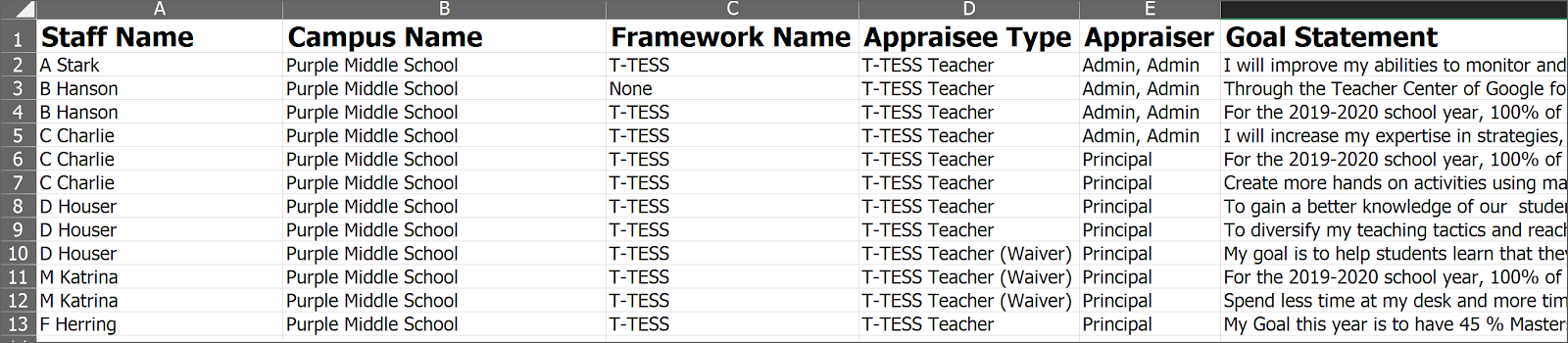
Running the Goal and Portfolio Detail Report will provide you with each teacher, their assigned evaluator, the goal statement, the dimensions selected with the goal, success criteria, completion dates, and more. This report is fundamental to determining which framework dimensions teachers are working on to create coaching groups, plan support, and plan professional learning opportunities. You can also inform walkthroughs for your principals based on success criteria and look-fors tied to goals your teachers are working on.
Run this report shortly after all goals have been approved. Be sure to set the dates to include goals created at the end of last year.
Detailed Analysis
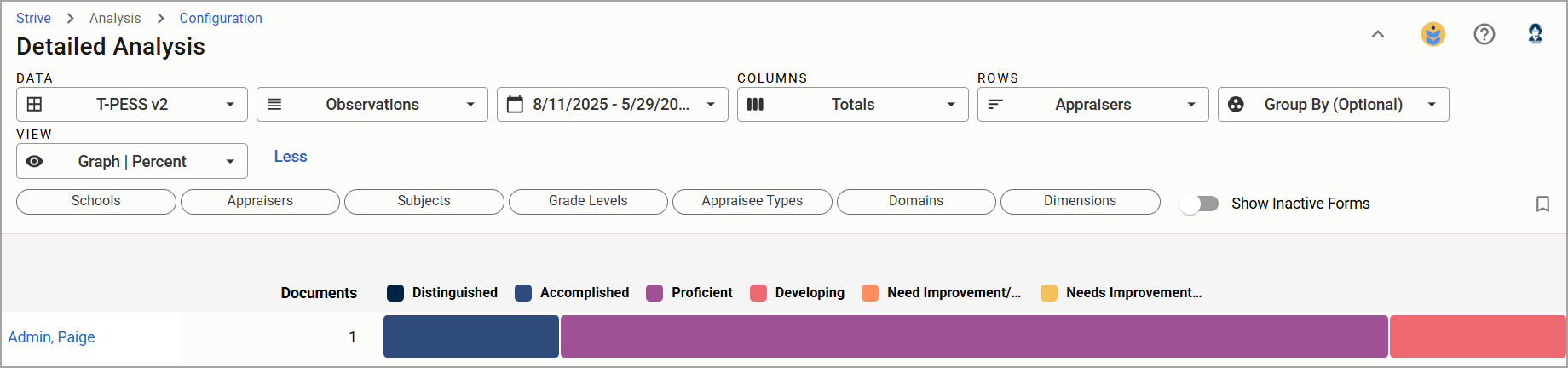
Use Detailed Analysis to illustrate correlations between framework dimensions attached to goals, professional development, and evaluation documents. Running this report to focus on Professional Goals and Professional Development over time allows you to view how many goals were tagged to specific dimensions and how many CPE credits were provided to support those goals.
Run this report after the summer and early fall PD has occurred to determine if more professional development needs to be offered to support specific dimensions. Be sure to set the dates to include goals and PD created at the end of last year.
During the Year: Helping Teachers With Tracking Goal Work
Adding goal evidence provides the basis for ongoing feedback and reflection between evaluators and staff members. It is also helpful for identifying any additional or alternative actions needed to achieve goals.