Courses are structured programs of instruction centered on a specific subject and grade level. Beacon links standard sets to each course, which then houses curriculum components related to the standards.
Courses List
The Courses screen lists your courses, any courses that were shared with you, and all of the courses created for your district. You can sort, filter, and search the course list to locate the one you want to view. Selecting a course allows you to view and edit the course. You can also add a new course by creating one from scratch or by importing materials into Beacon. Once you have created a course, teachers can link their plans to the corresponding course.
.png)
# | Field | Description |
|---|---|---|
1 | New | Opens a drop-down menu to create a new course using any of the following options:
|
2 | Subject | Filters the table by subject. |
3 | Grade Level | Filters the table by grade level. |
4 | Access Level | Filters the table to show only private courses to which you have access or to show only district-level courses. |
5 | Search by Title | Filters the table to show only courses with titles that match the search criteria. |
6 | Reset Filters | Clears all filters. |
7 | List | Displays all of the courses that you have access to, according to the applied filters. Columns include:
|
When you select a course from the list, it opens the Hub, Editor, or Attachment Viewer. The sections below provide more information about these views.
Course Hub
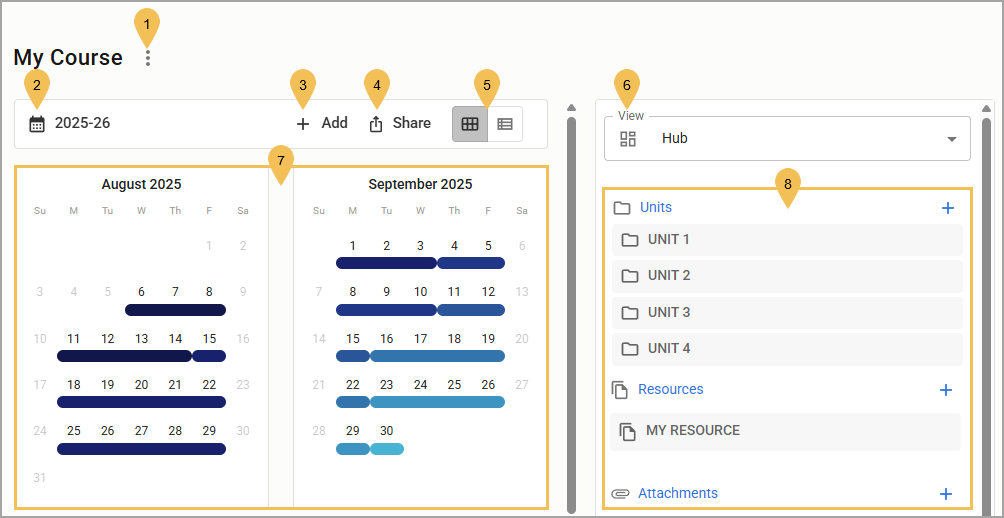
The Hub view presents a high-level overview of the course, including the course schedule, standard sets, units, lessons, resources, and other attachments linked to the course.
# | Field | Description |
|---|---|---|
1 | More Actions | Opens a drop-down menu that contains the following options:
|
2 | Instructional Calendar selector | Opens a drop-down menu that allows you to select current, past, or future instructional calendars. Default: current school year.
|
3 | Add | Opens a drop-down allowing you to create units or assessment windows. |
4 | Share | Opens a window where you can view and edit current permissions, share with more users, or remove access for users who no longer need it. For more information, see Sharing Curriculum Components. |
5 | Calendar view / List view | Switches between the Year at a Glance view () and Unit List view (). |
6 | View | Opens a drop-down menu where you can select the following views:
Select the Star icon to mark a file as the primary file. The primary file opens as the default when a user accesses the curriculum component. The Editor option exists by default and cannot be removed. |
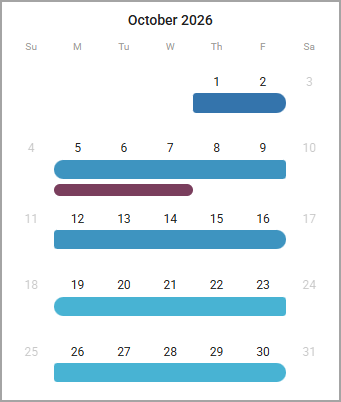
7 | Course Schedule | A visual representation of scheduled units. The Year at a Glance view () view shows units and assessment windows by month, represented by color-coded bars. Hover over the bar to see the unit or assessment title. Click on the bar to edit the details.
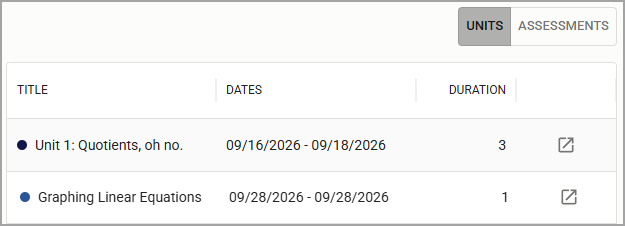
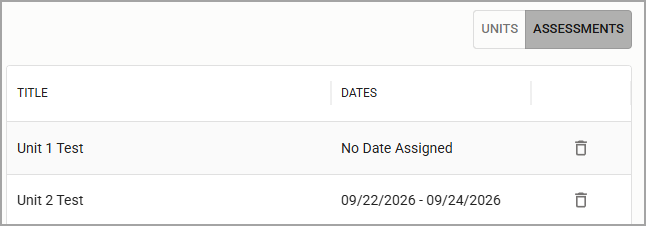
The List view () displays units and assessments as rows in a list. Select the Units tab to view the unit schedule or select the Assessments tab to see scheduled testing windows. Double-click a cell in the table to edit the title or date range.
|
8 | Relationships | Lists the units, resources, attachments, and standard sets linked to the course. Select the Add icon to link a new item. When you hover over an item in the list, the Unlink icon appears, allowing you to remove it if it was added accidentally or is no longer needed. For more information, see Using the Relationships Panel. |
Editor
The Editor is Beacon’s built-in word processor. You can use this handy tool to create documents such as templates, course syllabi, unit outlines, lessons, activities, and so on. To learn how to use features in the Editor, see Using the Editor.
.png)
Attachment Viewer
The Attachment Viewer shows any document you have uploaded as an attachment to the course. Select the file name from the View drop-down to open it in the left panel. The fields and controls available in the viewer depend on the file type. For an explanation of common icons, see Common Icons in Beacon.
.png)